Plan the exit as well as the visit
Check access rules, weather, route conditions and any seasonal closures before leaving. Carry the navigation, clothing, water and emergency equipment appropriate to the location. Tell a trusted person your plan where the route or conditions warrant it. A wildlife observation should not distract you from tides, traffic, unstable ground or changing light.
Choose a viewing position with room to withdraw without passing closer to the animal. Use established paths and authorised hides where available. Do not interpret the absence of a barrier as permission to enter. Protected sites such as Denali National Park and Preserve have specific wildlife and access guidance; read the current rules for the place you are actually visiting.
Carry optics you can use comfortably
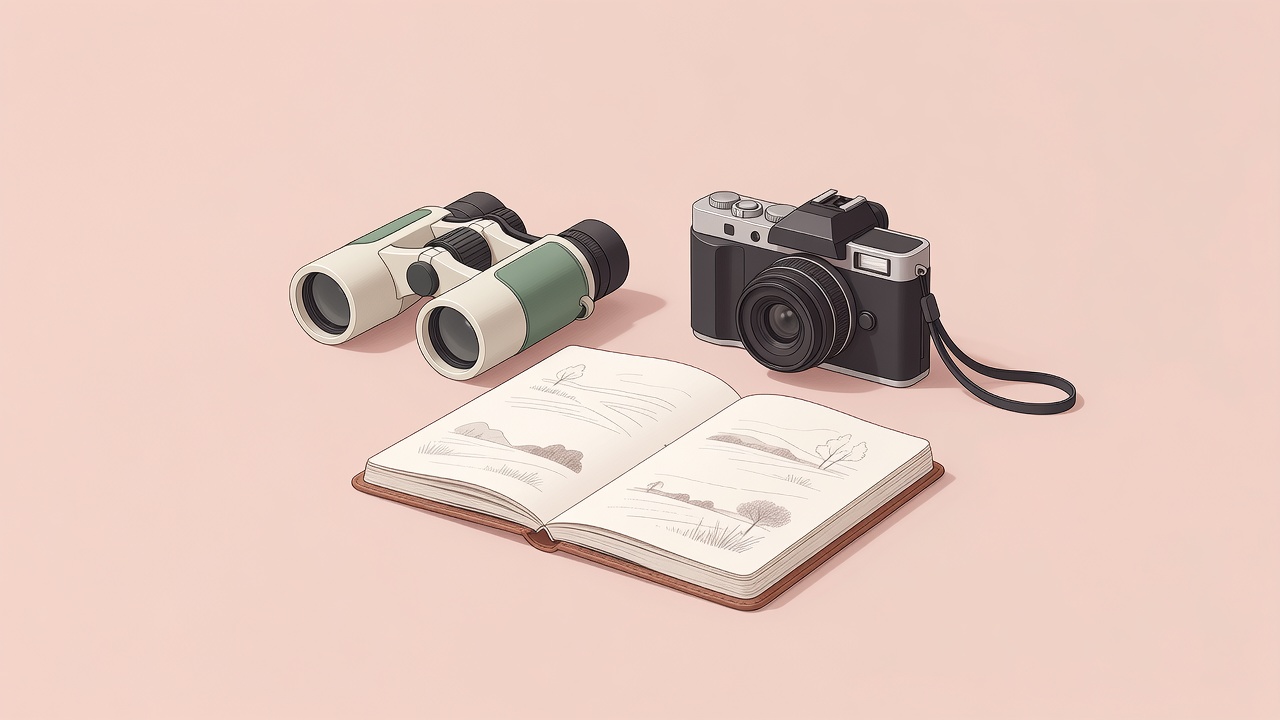
Binocular fit matters more than an impressive specification. Try the focus control, eye relief and weight with the clothing and glasses you normally wear. Higher magnification can make a handheld view harder to keep steady. A stable, comfortable image is more useful than detail you cannot reliably hold in view.
A notebook and pencil remain useful when batteries fail or cold weather makes a screen awkward. Record observation effort and uncertainty while the encounter is fresh. Keep spare power where needed, but do not let a device become a reason to remain after conditions deteriorate. Equipment supports judgement; it does not replace it.
Binoculars or a spotting scope?
Binoculars suit scanning and moving observations. A scope can help with distant, stationary subjects from an appropriate viewing point, but requires stable support and more setup. Neither is a reason to disregard minimum distances or closures.
What should a track-measuring kit include?
A small ruler, notebook and camera can be enough. Place a scale beside accessible evidence without touching the impression. Do not collect casts, dig into ground or move material without permission and a legitimate need.
Make photography follow the encounter
Set your exposure and quiet operating options before approaching a viewing point. Work from a distance that follows local rules and allows normal activity to continue. A longer lens can help you stay back, but it is not a guarantee of non-disturbance. Some animals respond to a silhouette, movement or repeated attention even at substantial distance.
Do not bait wildlife, use calls to provoke a response, flush an animal into view or rearrange vegetation around a nest. Avoid flash around sensitive wildlife and follow any stricter site rules. If the photograph requires the animal to stop what it was doing, give up the photograph. A missed image can be the right outcome.
Caption images honestly. Disclose illustrative models, captive settings and substantial alterations when relevant. Do not present a staged object as field evidence. Before sharing real images, check both metadata and visible landmarks for location clues, especially around breeding, roosting and denning sites.
Use a non-disturbance checklist
Ask whether you are blocking food, water, shelter, an escape route or a route to dependent young. Look for repeated vigilance, retreat, alarm behaviour or interrupted feeding. These can be warning signs even when an animal remains in place. Stillness is not consent, and apparent tolerance does not prove there is no cost.
If your presence may be affecting the animal, stop advancing and increase distance calmly when safe. Avoid sudden movements or turning a departure into a chase. Follow species-specific safety instructions from the land manager; general online advice cannot cover every encounter. Do not approach wildlife to test how close it will allow you to come.
Keep pets under the control required by local rules, and leave them at home where their presence is unsuitable. Respect other observers’ space without copying their behaviour uncritically. A group can create cumulative pressure even when each person believes they are being careful.
Make conservation useful, not performative
Support a locally appropriate project whose methods, permissions and data handling are clear. Habitat work, structured counts and practical volunteering can all matter, but they require suitable training and supervision. Do not install trail cameras, handle animals or mark nests independently because a project elsewhere uses those methods.
Ask how a project protects sensitive records and what volunteers should do if they encounter vulnerable wildlife. Separate public storytelling from confidential reporting. A broad description of your contribution is often enough; exact nest locations and recognisable access routes are not proof of commitment.
The Leave No Trace principles and National Audubon Society resources provide useful starting points for responsible outdoor practice and bird photography. Local law and site-specific instructions still take priority. The central skill is simple to name and worth practising: take less from the encounter than you could.
Bring the method together: prepare a private observation note.